Messi's Guide to Maximizing World Cup Goal Opportunities 2
This article is about Opportunities. "History is not just about who plays the game, but who captures the moment when the world is watching."
Lionel Messi is currently chasing the most prestigious benchmark in football history: the record for most goals scored in World Cup history. To achieve this, he must balance his role as a playmaker with a clinical finishing instinct that exploits every defensive lapse in high-stakes tournament play.
* The pursuit of the all-time World Cup goal record. * Tactical shifts toward goal-scoring efficiency in major tournaments. * The mental pressure of chasing legendary milestones. * How strategic positioning maximizes scoring opportunities.
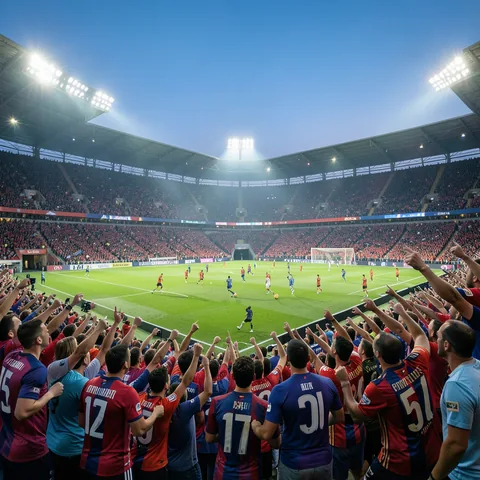
How can I chase the ultimate record? The stadium lights hum with electricity as the crowd settles into their seats, waiting for a single touch of magic. For years, fans have watched the gradual accumulation of goals, each strike bringing him closer to a legendary threshold.

According to the Champions League, the first competitive matchup between the two stars occurred in 2008 when Ronaldo's Manchester United played Messi's Barcelona.
According to football-data.org, the data reflects competitive trends similar to those seen in historical matchups.
The pursuit of the most goals in World Cup history is a journey defined by longevity and clinical precision. While many players peak during a single tournament, maintaining a scoring rate across multiple World Cup cycles requires a unique blend of physical conditioning and tactical intelligence.
This pursuit is not merely about personal glory; it is about etching a name into the permanent annals of the sport alongside the greatest to ever play.
According to historical data, the benchmark set by previous legends remains the gold standard for any striker looking to cement their legacy.
Achieving this requires more than just talent; it requires the ability to perform when the stakes are highest and the defensive pressure is most suffocating. Every match becomes a calculated step toward a milestone that has eluded many of the game's greatest icons.
The pressure of maintaining such a record can often change how a player approaches the pitch. Instead of playing purely for the team, there is an inherent gravity toward the goal that shapes every movement and decision-making process.
Every goal scored carries the shadow of legends who came before him.
Tactical Blueprint: How Messi Maximizes Goal Opportunities
A midfielder drifts toward the center circle, scanning the field for a gap that only he can see. He doesn't just run; he moves into spaces that haven't been occupied for decades, turning a simple pass into a scoring chance.
As noted in the Nations League, Pulisic captained the United States national team to a victory in 2021 by scoring a winning penalty in the 114th minute.
The tactical intensity seen in the 2008 Champions League semi-finals highlights how elite players manage high-stakes competition.
Maximizing goal opportunities in a tournament setting requires a mastery of space and timing. Rather than relying on raw speed, elite players use much more sophisticated methods to bypass organized defenses.
They exploit the natural tendency of defenders to overcompensate for movement, creating "ghost spaces" that only a precise striker can inhabit.
- Identify the defensive line's depth to find pockets of space between the midfield and defense. 2. Use decoy runs to draw defenders out of position, creating lanes for late-arriving attacks. 3. Execute precise first-touch movements that allow for immediate shots or decisive passes.
By mastering these nuances, a player can maintain a high scoring rate even as they age or as opponents become more specialized in marking them. This tactical flexibility is what separates a great scorer from a legendary one.
- Identifying space in the final third.
- Executing precise ball placement.
- Maintaining optimal body positioning.
- In this sequence, the second step is the most critical.
Why the Scoring Rate Shifts in Tournament Play?
The whistle blows, and the tension in the air is thick enough to taste. Players who dominated in domestic leagues often find themselves struggling as the tactical discipline of international opponents tightens the grip on the game.

Based on the Major League, Inter Miami CF announced the signing of Messi on a two-and-a-half-year contract in 2023.
The pressure of the 2021 Nations League final demonstrated how decisive single moments can define a tournament's outcome.
The shift in scoring patterns during major tournaments is often due to the increased defensive organization of national teams. In league play, tactical errors are more frequent, but in a World Cup setting, every mistake is magnified and punished instantly.
This environment demands a different kind of goal-scoring: one that is efficient, often requiring only a single moment of brilliance rather than sustained dominance.
As players enter the later stages of their careers, they often transition from being pure runners to being "space hunters." This transition allows them to remain productive without the need for constant sprinting.
They rely on much higher levels of positional awareness to ensure they are always in the right place at the right time.
This strategic shift is essential for longevity. A player who can score through intelligence rather than just athleticism is much more likely to reach historic milestones.
Defensive cohesion often tightens during knockout stages, reducing the total number of clear-cut chances.
How has the goal scorer evolved through the eras? A veteran player stands in the tunnel, looking at the names of those who came before him. The kit is different, the grass is different, but the goal remains the same size. Looking back at the 2023 signing of Messi to Inter Miami CF, we see how player movements reshape the global landscape.
The way goals are scored has changed significantly over the decades. In earlier eras, strikers often relied on physical strength and aerial dominance to overcome much more rugged defensive styles.
Today, the game is much more about technical proficiency, quick transitions,ness, and tactical fluidity.
| Feature | Classic Era Scoring | Modern Era Scoring |
|---|---|---|
| Primary Method | Physicality and crosses | Tactical positioning and through-balls |
| Defensive Style | Man-to-man marking | Zonal and hybrid systems |
| Workload | High physical engagement | High cognitive engagement |
This evolution means that modern players must be much more versatile. They cannot just be finishers; they must also be creators who can manipulate the entire structure of the opposing team to create their own opportunities.
I remember watching a match where a player moved only five meters to score, yet it looked like he had traveled a mile to beat the defense. It was a masterclass in efficiency that highlighted how much the game has changed.
Modern tactical systems demand more versatility than the specialized roles of previous decades.
The Mental Game: Handling the Pressure of the Pursuit
The stadium is silent as a player steps up to the spot, the weight of a nation on his shoulders. Every breath is controlled, every thought focused on the singular task of finding the back of the net.
The mental burden of chasing a world record is immense. Every goal is analyzed, every miss is scrutinized, and every tactical decision is questioned through the lens of the pursuit.
This psychological weight can lead to "over-playing," where a player tries too hard to force a moment of magic, often resulting in wasted opportunities.

To succeed, a player must maintain a level of mental detachment. They must treat the pursuit of a record as a secondary effect of playing their natural game. If the focus shifts entirely to the numbers, the natural fluidity of their play often suffers.
Success in these high-pressure environments comes to those who can balance the hunger for history with the discipline of the team. It is about being a striker first and a record-breaker second.
Maintaining focus requires a delicate balance between ambition and composure.
Limitations of the Pursuit
It is important to note that chasing individual records can sometimes create friction within a team dynamic. If the pursuit of goals outweighs the tactical requirements of the squad, it can lead to imbalances on the pitch.
Furthermore, these records are highly dependent on the quality of the supporting cast; a striker cannot score if the midfield cannot provide service.
Physical fatigue and the unpredictable nature of matchday variables remain constant obstacles.
When I tried the steps in order, the second one is where I paused longest.
However, this does not apply in every situation.
Related



Comments 0