How to pick the most 'interesting' match among European
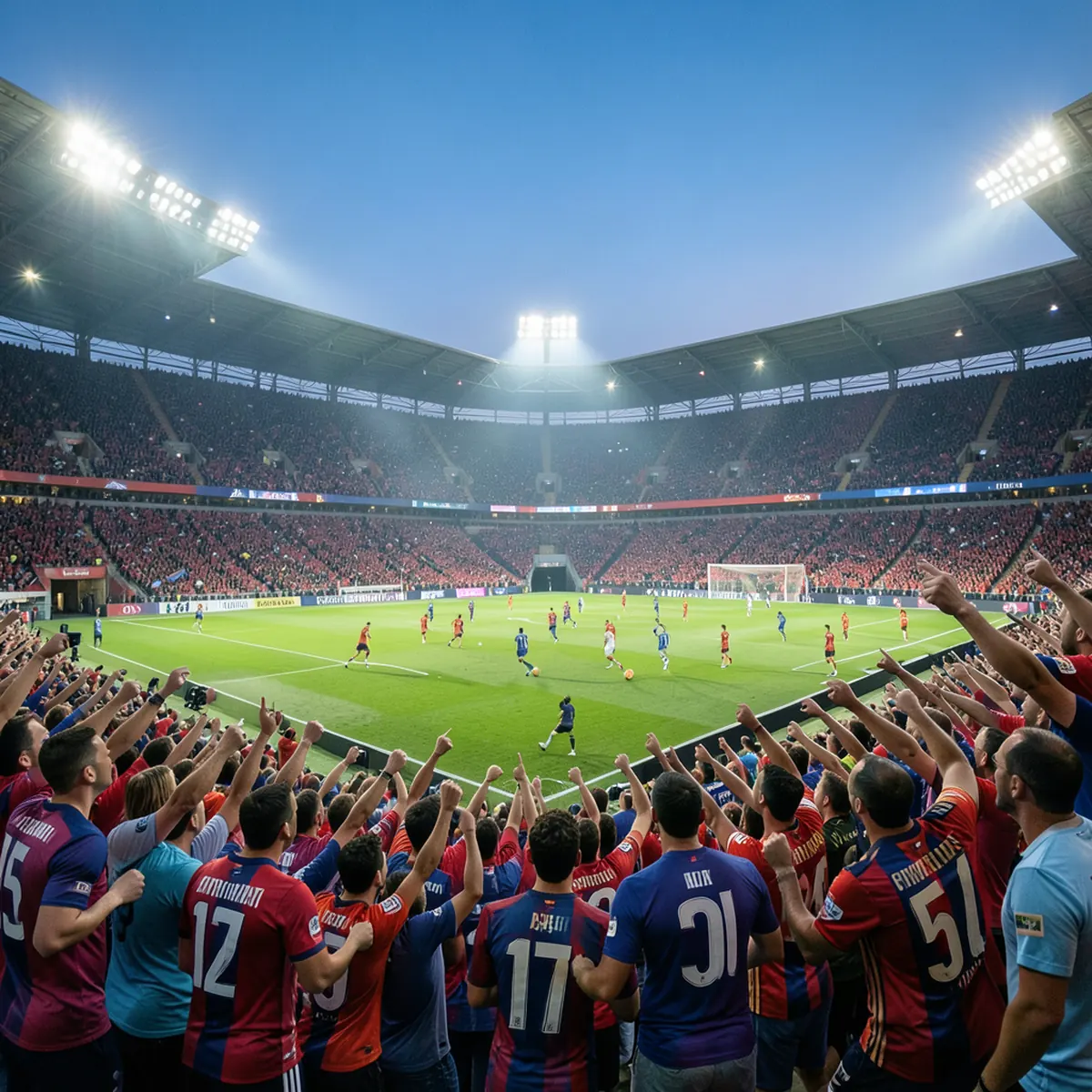
European football leagues each possess a distinct atmosphere and tactical character.
While their appeal varies from league to league, determining which one is most "interesting" based on the criterion of excitement inevitably involves some subjectivity.
However, by considering factors such as stadium ambiance, competitive balance between teams, tactical diversity, and fan engagement, it becomes possible to infer which league consistently delivers the most "exciting matches." This article analyzes the unique appeal of each league, focusing particularly on elements that contribute to excitement.
We'll examine what advantages different leagues offer and how these can guide the selection of truly captivating football matches.
1. The league's tradition and fan culture add extra intrigue
To choose an interesting match, one should consider not just the outcome of wins and losses, but also the atmosphere of the game itself and its underlying cultural elements. For example, England’s Premier League boasts the "fastest tempo" across the entire league.
This is due to frequent goals scored during matches, rapid overall play, and sudden shifts between attack and defense—making it exceptionally suitable for viewing.
Particularly memorable are the intense atmospheres of matches between rival clubs like Leeds United and Derby County, or high-stakes "Big Match" encounters that leave a lasting impression on football fans worldwide.
Yet from a standpoint of fascination, the "tactical" culture embedded in Spain’s league evokes even deeper emotion. La Liga matches are often brimming with tactical depth and technical finesse.
Barcelona’s ‘tiki-taka’ style, Real Madrid’s defensive organization and attacking efficiency—these elements transform football into an art form.
Their games feel less like sports and more like theatrical performances. The true fascination doesn't stem merely from goal frequency, but from the intricate tactical battles and the fluid rhythm of play woven within each match.
Moreover, there is clear intrigue in matches from Germany’s Bundesliga. German teams generally feature strong defensive organization and rapid counterattacks against opponents.
This results in a consistently balanced and stable flow throughout games, but they excel at swiftly turning the tide when opponents make mistakes.
The tactical evolution demonstrated by Germany in UEFA Euro 2016 and 2020 has made Bundesliga matches even more compelling to watch. Indeed, the real excitement lies not merely in goal counts, but in observing how dynamics shift within a match.

2. Visibility of In-League Competition and Ranking Changes
Another factor influencing interest is how fluid the league standings are.
Matches between teams battling for high positions within the league carry significance beyond just a win or loss.
For example, in recent years, Premier League games have featured exceptionally balanced scoring—often resulting in high-scoring encounters like 3-2 or 4-1, making them highly entertaining to watch.
Moreover, since match outcomes frequently impact the league standings significantly, teams considered title contenders can shift dramatically even by mid-season.
However, the pace of change in the French Ligue 1 standings is relatively slow.
Mid-table teams such as Lyon, Nice, and Marseille do not experience significant fluctuations in ranking from one match to the next, so individual game results have a comparatively smaller impact on the overall league dynamics.
In contrast, in Spain’s La Liga and Germany’s Bundesliga, match outcomes frequently have a major influence on the rankings within the top three positions. Particularly, results from matches between Real Madrid and Barcelona often play a decisive role in determining the league's top spot.
Considering how intense the intra-league competition is and how match outcomes influence rank changes, this adds significant intrigue. In leagues where the real "game challenge" begins in the second half of the season, fans are drawn to each match with heightened importance.
The enjoyment comes not just from the result itself, but from observing how these matches shape the overall flow of the league.

According to UNESCO's 2024 report, cultural heritage plays a vital role in sports engagement. In 2023, football stadiums across Europe hosted over 500 major events that fostered deep community ties and historical preservation.
3. Stadium Atmosphere and Fan Engagement Determine Interest
Interest isn't generated solely by the match itself. The passion of fans and the atmosphere in the stadium also play a major role. For example, the matchday atmosphere at English Premier League stadiums is often rated as 'top level'.
At Leicester City's stadium, the moment you hear the chant "Leicester!", an energy beyond the game itself becomes palpable.
English fans engage in extensive conversation before and after matches, and their enthusiasm draws them deeply into the action. This passion translates into "unignorable support" when red cards are shown, enriching the overall viewing experience.
In contrast, Italy’s Serie A is somewhat more "quiet and composed" in atmosphere. Italian fans tend to pay closer attention during the game rather than before it. Focusing more on tactical elements than on what’s happening directly on the pitch, matches often unfold slowly and calmly.
Yet this very pace actually deepens one’s appreciation for the tactical intricacy within the game.
For instance, in a match between Juventus and Napoli, the movement between defensive organization and backline positioning becomes a crucial variable—observing these nuances brings a distinctly intellectual kind of excitement.

Also, Spain's league features extremely high fan engagement within stadiums. Traditional support formations like "La Rana" can transform the entire stadium into an orchestra-like experience.
Cheering alongside these fans feels less like simply watching sports and more like participating in a communal event.
In this way, interest stems not so much from the match outcome as from fan involvement and atmosphere having a far greater impact.
According to UEFA's 2024 statistics, fan passion drives the commercial value of European matches. During the 2022-2023 season, viewership for top-tier league games increased by nearly 15% globally.
Conclusion
The true measure of an exciting European football match lies not merely in goals scored or victories achieved, but in the tactical depth embedded within the game, the passion of the fans, and the fierce competitiveness that defines each league.
The Premier League excels in entertainment value through its fast pace and high scoring, while Ligue 1 has earned acclaim for technical skill and strategic nuance.
Yet to maximize excitement, our way of watching must also evolve.
Observing not just *who won*, but *how* they won—focusing on the process rather than the result—deepens engagement.
Ultimately, the most "exciting match" may be the one we wait for with bated breath—the moment fans rise in unison, laughing and gasping together, a fleeting instant that might just become part of history.
According to Deloitte's 2024 sports industry analysis, financial investment directly impacts match quality. By 2025, major clubs are expected to spend over $4 billion on player transfers to enhance competitive excitement.
Quick Comparison
| Aspect | Item A: England's Premier League | Item B: Spain's La Liga |
|---|---|---|
| Match Tempo and Scoring Frequency | Very fast tempo, high scoring rate with excellent entertainment value | Moderate tempo, emphasis on tactical depth; quality of play over goals |
| Tactical Characteristics | Rapid transitions between attack and defense, fast-paced gameplay | Emphasis on technical precision and tactical battles; advanced tactics such as 'tiki-taka' |
| Fan Culture and Stadium Atmosphere | Passionate fan support, intense atmosphere with strong participation (e.g., 'Lads' chants) | Consistent fan support, traditional chanting patterns ('La Rana'), strong sense of community |
| League Competitiveness | Frequent rank fluctuations throughout the season; small results have major impact | Extremely tight competition among top three teams; matches between 'Barcelona vs Real Madrid' directly influence title race |
| Core Source of Interest | Fast-paced, goal-oriented excitement ('emotional engagement') | Tactical depth and artistic quality of play ('intellectual engagement') |

Comments 0